Definitions and units
Sign convention
Generators and loads in an AC power system can behave like an inductor or a capacitor, which corresponds to two different sign conventions — one from the generator’s and one from the load’s perspective, defined by the direction of power flow. Like PyPSA, eDisGo uses both conventions depending on the component.
Generator sign convention
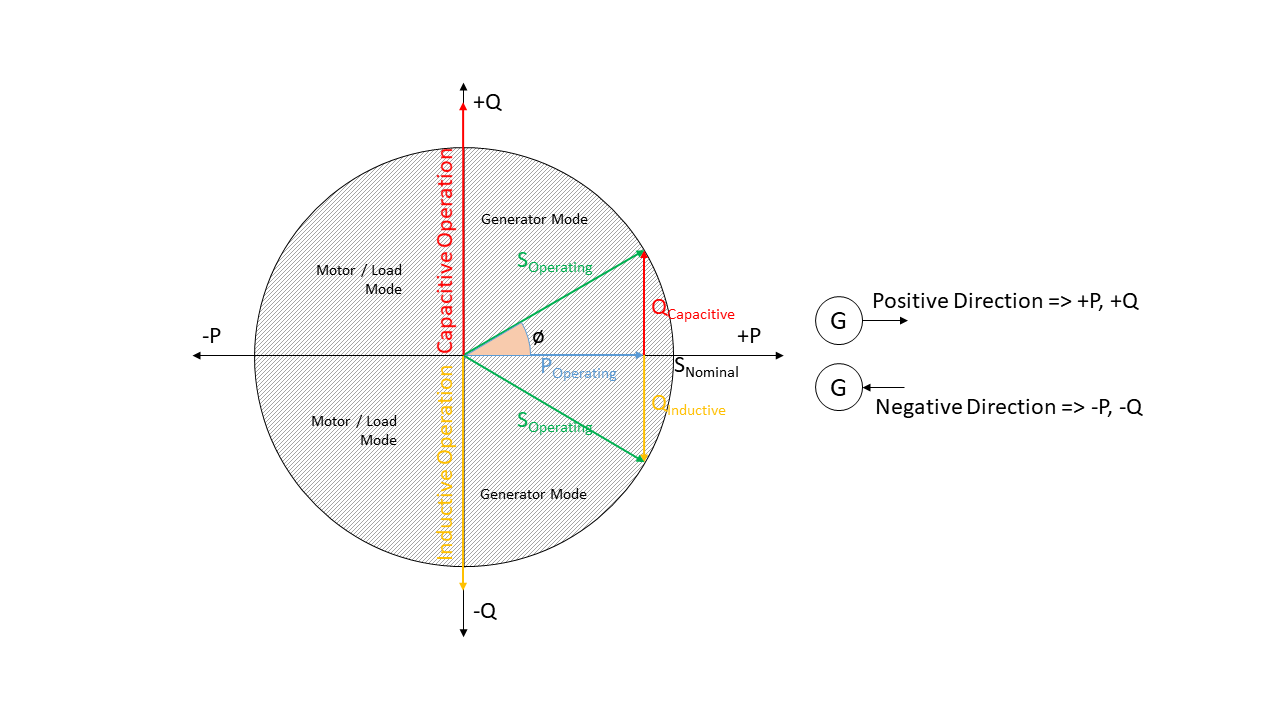
Fig. 12 Generator sign convention in detail
Time series for generators and storage units
(Generator,
Storage) use the generator sign convention.
Load sign convention
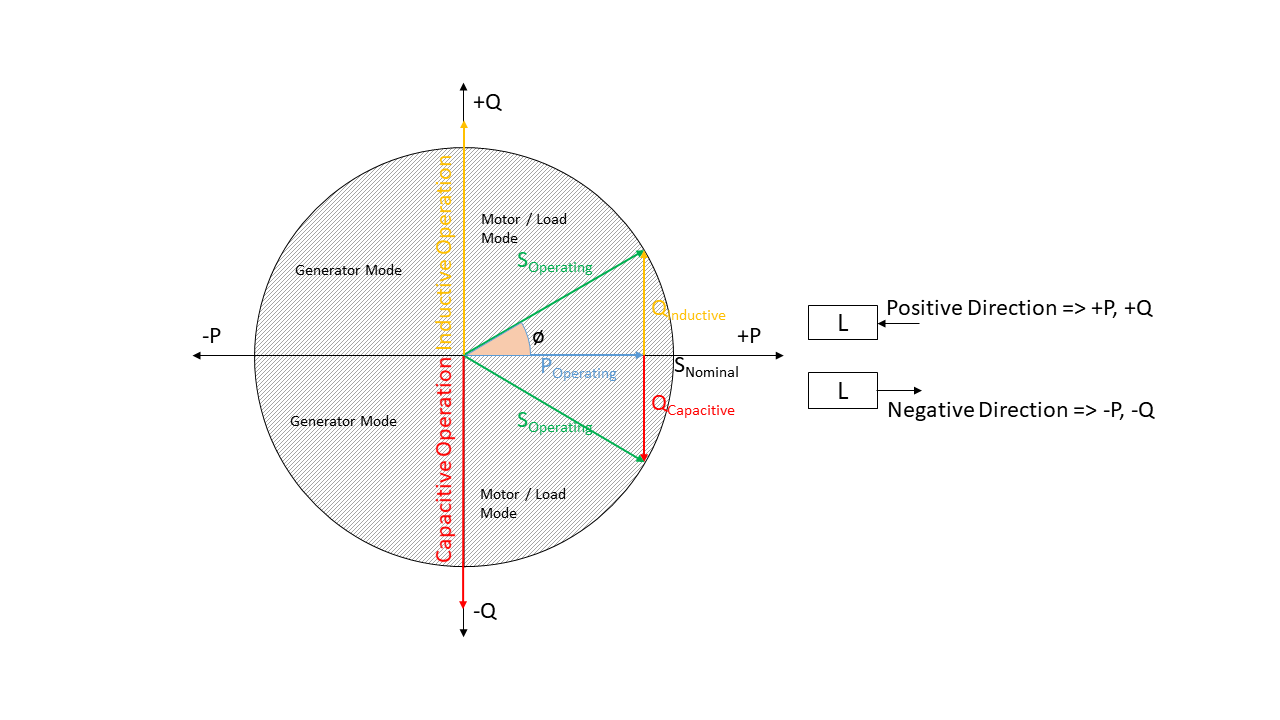
Fig. 13 Load sign convention in detail
Time series for loads (Load) use the load sign
convention.
Reactive power sign convention
Using the generator sign convention, a positive reactive power (Q) means capacitive behaviour and a negative Q means inductive behaviour.
Using the load sign convention this is reversed: a positive Q means inductive behaviour and a negative Q means capacitive behaviour.
See Reactive power for how reactive power is set from a fixed power factor.
Units
Variable |
Symbol |
Unit |
Comment |
|---|---|---|---|
Current |
I |
kA |
|
Length |
l |
km |
|
Active Power |
P |
MW |
|
Reactive Power |
Q |
MVar |
|
Apparent Power |
S |
MVA |
|
Resistance |
R |
Ohm or Ohm/km |
Ohm/km applies to lines |
Reactance |
X |
Ohm or Ohm/km |
Ohm/km applies to lines |
Voltage |
V |
kV |
|
Inductance |
L |
mH/km |
|
Capacitance |
C |
µF/km |
|
Costs |
kEUR |